
Doctor media interview preparation starts with the scope of the conversation. A journalist may want a short professional explanation, a broadcaster may be producing a live segment, and an event organiser may be recording material to reuse. Each format changes what the speaker can clarify, how much context survives editing and who handles any correction.
Give the spokesperson a focused brief that fits on one page. Include the audience, the requested topic, the recording format and the person who will confirm factual details. Then rehearse the difficult transitions, including what to say when a question falls outside the agreed scope.
Ask what will be recorded and published
Request the topic, intended audience, platform and expected length. Find out whether the appearance is live, edited or quoted in writing. Ask which practice details and headshots the producer intends to use. Confirm the way the doctor's name, title and organisation should appear.
Agree the practical arrangements in advance. Who sends the access link? When should the spokesperson arrive? Where will a factual correction be sent? A clinician who understands the format can use the preparation time on clear explanations rather than discovering the length of a segment at the last minute. Record agreements with the producer in writing and share them with the person who will attend.
Prepare a few claims the speaker can support
Build the brief around two or three points the audience can understand without specialist background. For each point, record the supporting reference, the date checked and any qualification needed to keep it accurate. If you use a number, include its denominator, time period and what it actually describes. Give the speaker enough context to avoid implying that a broad observation applies to every person.
Keep promotional details separate from professional explanations. A clinic's location, appointment channel and team information can be verified as administrative facts. Statements about suitability, outcomes or clinical evidence need appropriate review. Remove details the team cannot substantiate before rehearsal so the speaker is free to focus on the useful material.
Practise answering in complete thoughts
For a short recording, prepare answers that make sense if heard without the question. “That depends” can be a sensible opening, but it needs a sentence explaining what it depends on. Put the essential point first, then give an example or qualification. Avoid delivering an entire script word for word. A speaker who understands the idea can adapt when the question is phrased differently.
Ask a colleague to listen without reading the brief. Have them repeat back the central point. If they remember a confident adjective but miss the boundary, move the boundary closer to the claim. The W3C writing guidance gives principles for clear wording that can also help when turning specialist notes into spoken explanations.
Prepare for questions outside the agreed scope
List the obvious follow-up questions, including ones the doctor should redirect. Decide how to acknowledge an individual question without trying to assess a person's circumstances in a public interview. For unrelated claims, a concise answer can identify the limit of the available evidence and return to the question the speaker can address.
Run one rehearsal where the interviewer changes the order and presses for a yes-or-no answer. Practise pausing and offering a short clarification. The goal is to avoid surprising the speaker with a boundary they have never had to say aloud. The assistant in the room should also know which questions need a written follow-up.

Rehearse a factual correction
Imagine a recorded segment introduces a visiting consultant as the owner of the clinic. The consultant notices the mistake while answering the first question. A prepared response might be “Just to clarify my role, I see scheduled patients here as a visiting consultant.” The clinic's contact then sends the confirmed title and spelling in writing to the producer.
Try the same exercise for an incorrect number in a published article. Compare the published passage with the brief and provide the exact replacement. A concise message with the original wording, proposed correction and supporting record is easier for an editor to act on than a general complaint. Record whether the correction is accepted and check what audiences can see afterward.
Set up the room for usable sound
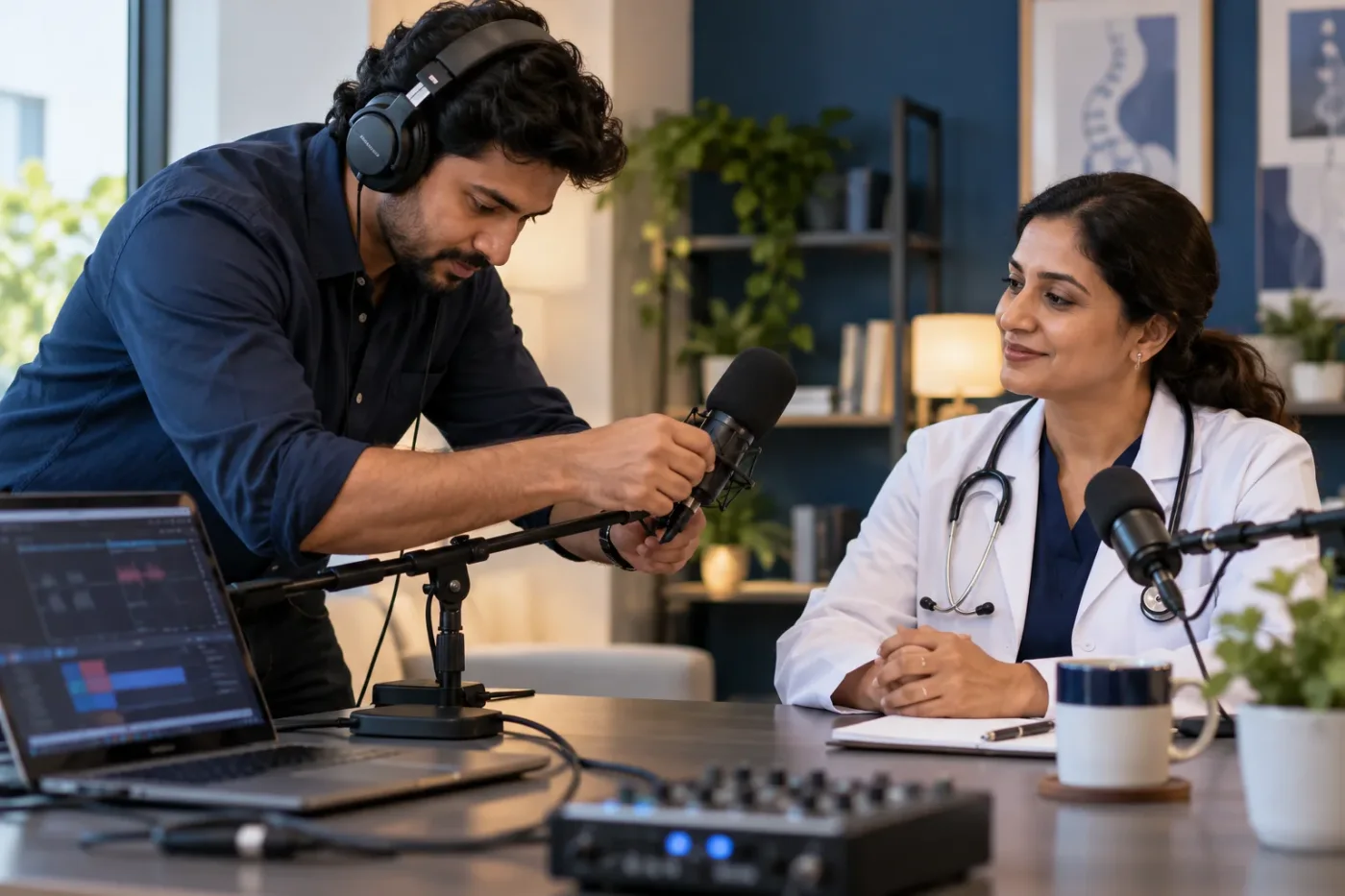
Use a quiet space and test the microphone from the position where the speaker will sit. For a remote session, confirm the link works on the intended network, check whether headphones are needed and identify a backup way to contact the producer. Keep on-screen names and backgrounds consistent with the approved introduction.
Walk through what will happen before recording begins. The person helping the speaker can monitor background interruptions, while the producer manages framing and audio. If you are recording from a practice, choose a location where visitors and records are out of frame. Check the preview from the camera's perspective. A quiet room can still reveal information on a reflective glass door or a monitor behind the speaker.

Review the published material in context
After publication, review the title, caption, excerpt and selected clips alongside the full material. A headline can change the emphasis of an otherwise careful explanation. Check the spelling, role and practice details first. Then identify any meaningful factual error, with a link and timestamp where possible.
If the clinic republishes a clip, introduce it with enough context to preserve its meaning. Verify the agreed reuse arrangements before posting the producer's footage. Link readers to the original when appropriate. Keep the publication record in a place the communications team can find when preparing future interviews.
Decide who owns the next action
A good handover gives the doctor the short brief, the organiser a verified biography and the clinic a correction contact. It also tells everyone when the final facts were checked. Keep approval of professional statements with the appropriate practice reviewer and let the communications lead handle logistics and copy.
Doctor Promotion's digital PR service can be discussed around the actual format and preparation workload. Provide the topic, proposed outlet and deadline via the contact page, along with any questions the spokesperson has already received.
Build an answer bank for the producer
A short written answer bank can help the production team prepare the introduction and background captions. Keep each answer tied to an expected question. Include a phonetic cue for names that might be read aloud and a plain description of the doctor's role. Record the person who confirmed each detail. If the producer asks for extra material on the day, review whether the proposed wording changes the scope. A quotation about how the practice handles enquiries should remain a statement about its own process, even if the producer asks for a broad generalisation. Share final wording in one place so a corrected credential does not get lost among earlier email attachments.
Frequently asked questions
Should a doctor memorise the whole interview?
Practise key points and their limits. Rehearse changes in question order so the explanation remains clear when the conversation shifts.
Who should review the speaker biography?
Ask the doctor and the practice's designated owner to verify the current title, credentials and affiliation before sending it to the producer.
What belongs in a correction request?
Include the published link or timestamp, the exact point that needs correction and the verified replacement wording.